SKY WATCH FRIDAY time! I am busy busy with stimulus yuck, so I might not get a chance to say hi. Please don't take offense. Our hosts: Klaus Sandy Ivar Wren Louise Fishing Guy
Thanks, also,to Dot and Tom, who were instrumental in the success of this blogging event. You should definitely come fly with us!
In honor of our summertime-like thunderstorms, I give you cloud to cloud lightning at night.
 This morning, I awoke to flashes of lightning, no thunder, just bright flashes of light, lighting up the dawning morning sky. Just moments ago (6:40AM or so), the National Weather Service in Jacksonville issued a severe thunderstorm warning including the county to my east, indicating that hail and wind were a definite threat from the supercell that was pressing southward out of Fargo, Georgia.
Lightning without sound is referred to as "heat lightning". My parents used to tell me that "heat lightning" was caused by extreme heat and it's harmless. Many people actually believe that heat lightning is a "safe lightning", not necessarily true. Well, it is called heat lightning, but that really is a misnomer. Heat lightning is lightning with no audible thunder. It's not because it has no sound, but because it is too far away or changes in densities in the air affect whether or not the sound of the thunder is able to refract to us, so we can hear it. If a lightning strike is a sufficient distance from the observer, sound from the strike will not be heard. These "silent bolts" are called heat lightning.
The movement of sound in the atmosphere depends on the atmospheric properties of the air such as temperature and density. Because temperature and density change with height, the sound of thunder is refracted through the troposphere. This refraction results in spaces of volume in which the thunder does not propagate through.  The sound of thunder often reflects off the earth's surface. The rumbling sound from thunder is partly due to reflections off the earth's surface. This reflection and refraction leaves voids where thunder can not be heard (click here for an applet of this by Tom Whittaker.) Therefore, the Earth's curvature also contributes to people far from the strike from not hearing it. Thunder is more likely to be bounced off the earth's surface before it reaches an observer far from the strike. The reflection and refraction in the troposphere determines who hears the strike and who doesn't.
The term "heat" in heat lighting has little to do with temperature. Since heat lightning is most likely to be seen in association with air mass thunderstorms in the warm season, the term "heat" may have been used because these flashes are often seen when surface temperatures are warm.
~Meteorologist, Jeff Haby As I said though, it is possible for density and temperature to affect whether or not the sound of thunder travels through the air, so potentially dangerous nearby thunderstorms can go unheard (not too common). So, "if you hear thunder, you are close enough to be struck" AND if you see nearby lightning, get inside! Lightning is a real and serious threat, always.
  Lightning strikes can (and do) occur outside of the audible thunder zone. Click on the above image for lightning facts about strikes "out of the clear blue sky". Play it safe. If there is a thunderstorm anywhere nearby, get indoors.
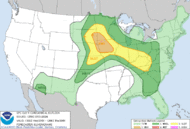
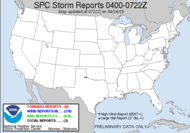
Speaking of thunderstorms, looks like a major concern for hefty severe weather, including a heightened risk for tornadoes. The Storm Prediction Center is expecting the next two days to be among the most active of the year for severe weather. 

Folks in the northern plains, including Wisconsin should be very aware of the weather, and take any warnings seriously, as tornadoes are a serious threat today.SEVERAL ROUNDS OF SEVERE STORMS WILL LIKELY AFFECT THIS AREA... COUPLED WITH STRONG DAYTIME HEATING AND DEWPOINTS IN THE MID 70S WILL YIELD EXTREME INSTABILITY WITH MLCAPE VALUES APPROACHING 5000 J/KG AND LITTLE CAP. FORECAST SOUNDINGS OVER SOUTHERN MN AND NORTHERN IA INDICATE THE RISK OF INTENSE SUPERCELLS FORMING OVER THIS AREA CAPABLE OF VERY LARGE HAIL...DAMAGING WINDS...AND PERHAPS SIGNIFICANT TORNADOES.
Have a safe day... turn on your weather radios! (That includes you, sis!)
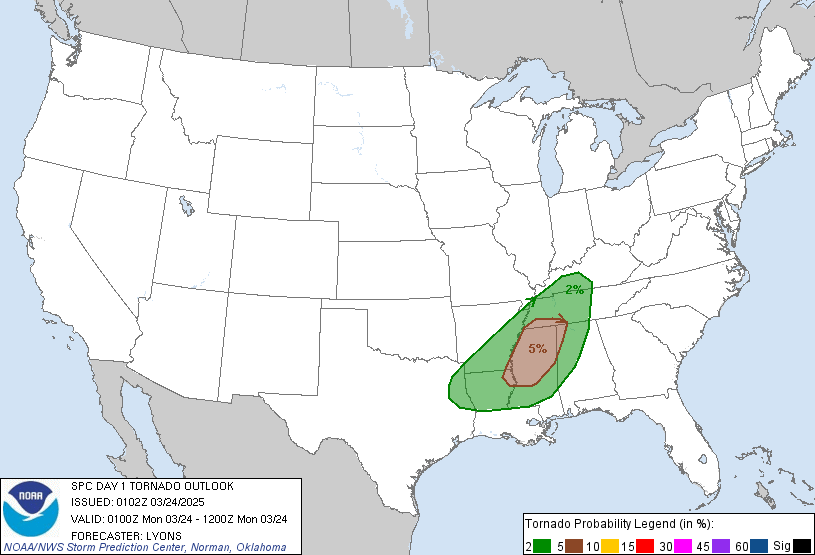
12:00pmEDT: Talk about Dewvoid... those watches might has well have been 1000 miles away... I am between them. Alas, the tornado probabilities have been redrawn...
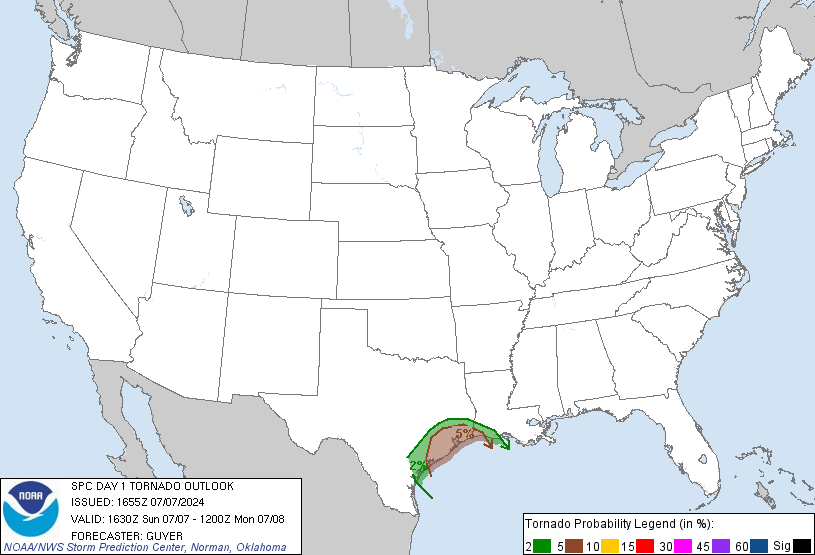 ... and we are within an area with a chance of tornadoes...
Latest update: Apparently, I typed too loudly... Dewvoid, back in action.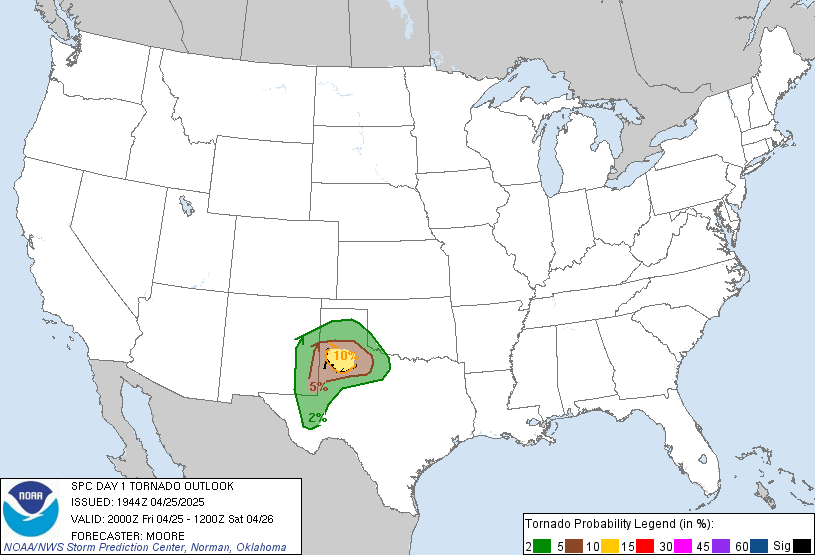 ~Dewdrop
Thursday, June 18, 2009
What is heat lightning???


Thursday, April 23, 2009
Crazy Hail outbreak in north Georgia and Atlanta metro area
 This evening, as I was driving home, I got a text message from my dear friend, Nicole in
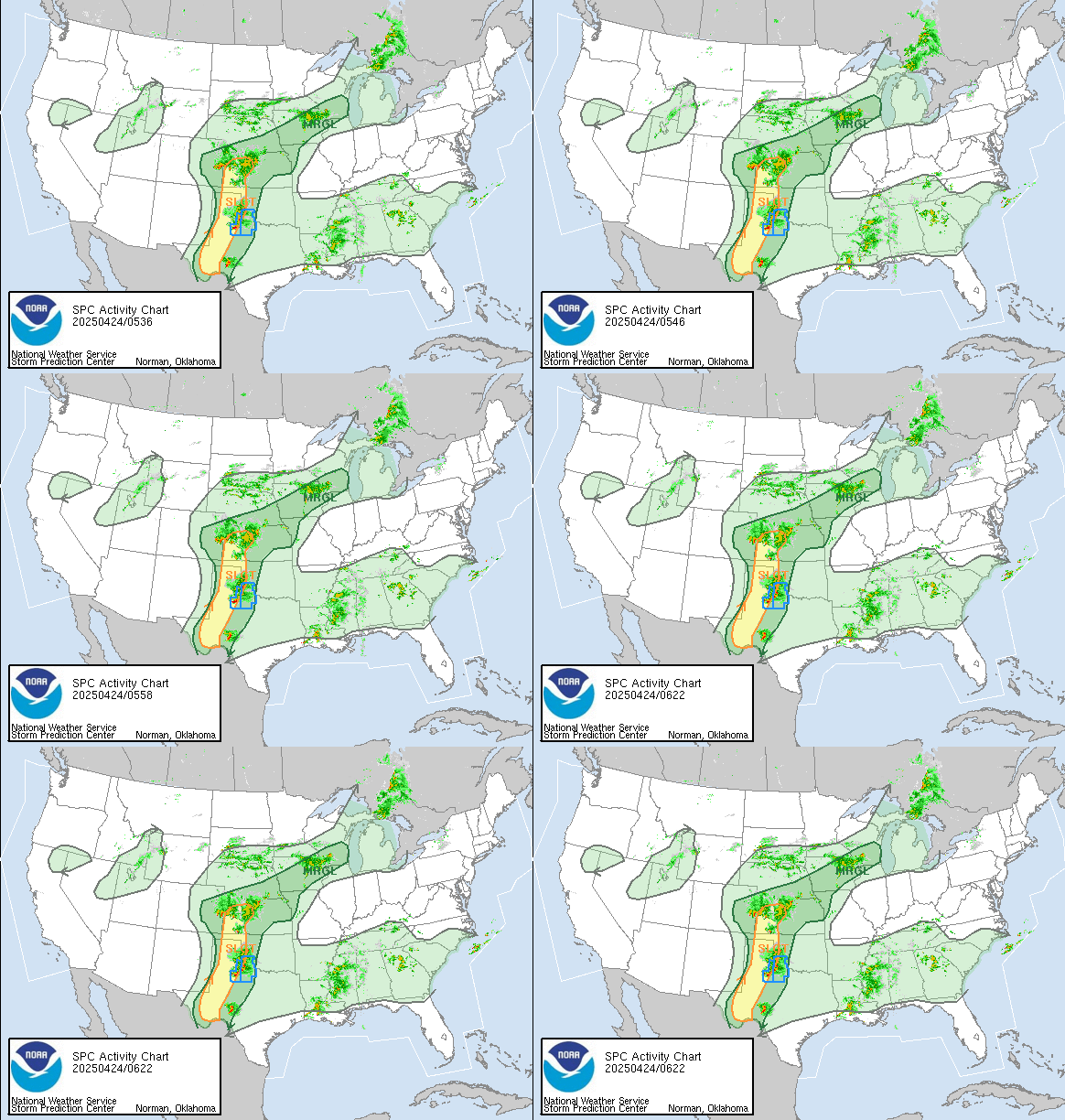
 Cartersville who was working in Acworth, reporting "HAIL!! And lots of it!". When I asked for pics, she said that security wasn't letting them out, but reported that the hail was pea to quarter size, and they were under a severe thunderstorm warning. When I arrived home to check radar, this is what I saw: Reports of hail from 3/4" to 1 3/4" were reported all around there; seriously, check it out.
I just now got a text from my dear friend, Jen, saying I would love the lightning in Winder... very intense.
Thank you so much ladies!
Crazy... totally random... ~Dew
~Dew